
HIV testing and risks of sexual transmission
 This guide to HIV testing and HIV transmission was updated in June 2021.
The main change since the previous edition is that UK guidelines (2020) now recommend waiting six weeks before having an HIV test. See: What is the window period for an HIV test?
There is also a stronger emphasis throughout the guide on U=U and PrEP.
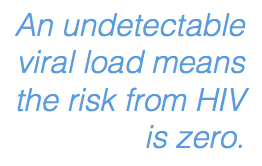
- U=U: how an undetectable viral load on ART stops HIV transmission.
- PrEP: how effectively a pill called PrEP prevents transmission. PrEP is now available free in the UK on the NHS.
This guide was produced to answer all questions about HIV testing. It also answers all questions on the risks of transmission.
 Introduction
HIV in the UK
HIV basics
Ways that HIV is not transmitted
Risks for transmission
- Between 100% safety and 100% risk
- You and your partners HIV status
- Viral load
- Type of sex and condom use
- Oral sex
- Sexual fluid
- How long sex lasts
- How vigorous the sex is
- Genetics
- Medical male circumcision
- Other sexually transmitted infections (STIs)
- Luck (and statistics)
HIV testing: feelings of fear, anxiety and guilt
Frequently Asked Questions (FAQs)
- Do I have HIV or need to test?
- Symptoms and seroconversion
- Does washing after sex increase the risk? (maybe, yes)
- How can my partner test positive and I test negative?
- Are some people protected from infection?
- Risks for men vs women and insertive vs receptive?
PrEP (Pre-Exposure Prophylaxis)
PEP and PEPSE
U=U: Undetectable = Untransmittable
HIV testing
- How soon can I take a test?
- What is the window period?
- Where can I test in the UK?
- Why do some UK clinics ask people to wait 3 months?
- What happens when I test?
- How long do results take and how are they reported?
- What does a number on my negative HIV test result mean?
- Test accuracy, results and further testing
- What happens after my test?
- What happens if I am HIV positive?
Skin, mucous membranes and HIV transmission
Timeline for immune responses and testing
Additional sections
- Appendix 1: Different types of HIV test
- Appendix 2: Theoretical risk, population risk & individual risk
- Appendix 3: How HIV tests work
Glossary
Further information and links
References
Feedback
Tables, diagrams and illustrations
Credits
This guide was written and compiled by Simon Collins for HIV i-Base with appendices written by Charlotte Walker.
1st edition February 2012.
2nd edition February 2013.
3rd edition July 2016.
4th edition, December 2019.
5th edition, June 2021.
Thanks to the community and healthcare professional advisors for comments including Dr David Asboe, Bisi Alimi, Polly Clayden, Paul Clift, Nathan Geffen, Li Marhaban, Angelina Namiba, Emma Rezel, Memory Sachikonye, Tracy Swan, Matt Williams.
Thanks to MAC AIDS Fund for supporting this publication.
About our guides
Information about how we produced this guide and the importance of using language that is direct and easy to understand.
This includes information on how to write non technical medical information that may be useful as a resource for other organisations.
Cover: Untitled, 1984 © Keith Haring Foundation. Used with permission.
Last updated: 1 June 2021.